Protected by Copyscape Web Copyright Protection Software
Showing posts with label What Does It Mean?. Show all posts

Tuesday, December 7, 2010

My Mother’s New Appearance


My mother, dead five months now, surprised me by floating through my dream this predawn morning, wearing remarkable clothes she never wore in life.

In a large gathering of familiar people at a once-grand, now-tired hotel, I glimpsed her sometimes as my dream-plot unfolded. She wore flowing silks (or maybe rayon) in bright, large florals—a tunic outfit, once, as she threaded her way through the lobby to the big banquet room, and later an ankle-length dress, an updated 1920s style with a dropped waist. The dress was a few sizes too big for her little body, but she had put on a bit of weight since she died.

For the last 30 years, my mother lived in blue jeans and plain cotton blouses, never tucked in, and that’s what she was buried in. For church and special occasions, she had two pairs of trousers and a couple of dressier blouses, plus a pants suit. My mother despised dresses, and on the rare occasion when she wore one in the ’60s and ’70s, they were shapeless and ugly.

She wore an awful knee-length A-line polyester dress, in an orange and navy geometric print, for her 25th wedding anniversary celebration with my father. She sewed an undistinguished floor-length polyester dress for my evening wedding in 1977. I tried to get her into clothing that fitted her curvy shape, but she wouldn’t have any of it. I wonder if she was motivated by dislike of her body (which she had expressed to me a time or two) or simply comfort.

I smiled to see her in my dream wearing those eye-catching bold floral designs in fluid, clinging fabrics. Oddly, she accompanied a lady friend wearing the exact same clothes. The sight of the two them, dressed alike, made me pause in my dream to marvel and wonder why. But I didn’t speak to my mother until later in the plot, and then it was a curious encounter.

I had gone into my hotel room to attend to some private mission, and I noticed as I closed the door that its lock was broken. That made me uneasy, vulnerable and fearful that someone would intrude. And sure enough, my mother opened my door and stood in the doorway, wearing that ankle-length dress. Behind her in the hallway was a shadow of that companion dressed like her.

I repudiated her immediately. I didn’t know if her mind was fully restored to its pre-Alzheimer’s existence but I gave her no chance to talk. I didn’t want her to witness what I was doing. My response to her standing in my doorway was along the lines of “Excuse me! Please leave! And shut the door behind you!”

And without any ado, she turned around and went out. I noticed then that her dress, which was a pastel aqua with an enormous floral pattern, was slightly too large for her, being loose around the hips. It was an eye-catching, attractive dress, but she needed at least one size smaller.

Then I remembered she had died. I felt a little guilty for sending her out, but mostly pleased because of her clothing, and then I dismissed her from my mind because she wasn’t important to my plot.

I wonder what dreams are about sometimes. I wonder if they’re significant or simply imaginative random adventures our brains spin in sleep. Part of me wants to ask questions about the whys and wherefores of this particular dream, but the other, more influential part of me says that’s inviting paralysis by analysis. Simply enjoy the curious dream and let myself smile about my mother’s new style of clothes.


Wednesday, March 10, 2010

The Noble Art of Neglect


“Besides the noble art of getting things done, there is the noble art of leaving things undone. The wisdom of life consists in the elimination of non-essentials.”

Lin Yutang


I confess that I have dust bunnies. The floorboards need cleaning. The Christmas decorations are still on the garage floor. The list of chores that are undone is pretty long, actually. I have priorities higher than housekeeping.

Today’s quote makes me feel great. I get to make choices about what’s non-essential today, using the welfare of others and myself as my guiding light.

Distractions pull me away from my priorities sometimes. I want to complete a task, but get waylaid by answering emails or cleaning a suddenly-too-dirty bathroom. Susan at Inappropriate Sue has a wonderful post called The Science of Distractions. You’ll love reading it. It totally distracted me from a job I had set out to do, and it was well worth the time.

Sometimes people interrupt me when I’m working. They call at inconvenient times or they have problems when I’d rather think about my own self. That’s when I have to choose what’s essential and what’s not. People usually win over work.

Phone calls from members of Alcoholics Anonymous take a lot of time each day. Occasionally, I’ll sigh when a newcomer phones to tell me about her issues. But I have to remember that if I want to keep what I have, such as serenity and sobriety, I have to give it away. It’s an essential.

Creativity is an essential too. There’s tremendous spiritual satisfaction in creating something, whether it’s a piece of furniture or a poem. We all need spiritual food.

I need to spend time with my family, to nurture those relationships. My older brother is coming to visit for a few days at exactly the most inconvenient time today. I have two more magazine articles to write. But they’re short, and I can stay up a little later. Family is important.

It’s a challenge when two essentials conflict. That’s when I ask for guidance and try to think outside the box for creative ways to take care the necessary stuff.

What are your essentials? What do you think of the noble art of leaving things undone?

~~~~~~

My photo is of what I think is a piece of brain coral. It represents my brain on overload, because I have left all my writing assignments until deadline.

Monday, March 8, 2010

Does Persistence Make You Brilliant?


“My strength lies solely in my tenacity.”

Louis Pasteur


Louis Pasteur had a lot more going for him than his persistence. He was a brilliant chemist who was one of the founders of microbiology, and he made major breakthroughs in the field of germ-caused disease. His name is a household word because he invented pasteurization, a way to prevent milk from causing sickness.

But he said the secret to reaching his goals was his determination, not his intellect or his creativity. So be it.

I’ve stuck with things long after they ceased to be beneficial. I have persisted in unhealthy relationships, destructive drug and alcohol use, and stinking thinking, as it’s called in some circles. I was either determined to make them work or unable to stop engaging in them.

But I’ve learned how to curb that stubbornness, and it isn’t because I became strong. Instead, I teamed up with God, and I was willing to be transformed. God laid his grace on me. It takes a daily decision on my part to accept his grace.

Thanks to that spiritual relationship, I can use my tenacity to do good things. I get work accomplished. I participate in a healthy marriage. I research and make discoveries about life. I can resolve to not engage in unhealthy behavior, and succeed for the most part.

This past weekend, tenacity helped me learn about earthquakes. I studied plate tectonics, the magnitude, energy, and intensity scales, data from the U.S. Geological Survey and international agencies. Then I wrote a 1500-word article explaining earthquakes for my local magazine. We had a 6.5 quake here six years ago, and it made the town sensitive to the earthquakes in Haiti and Chile.

Tenacity helped me put aside distractions and focus on the work. It’s a challenge to explain complicated information in simple terms. It’s also a lot of fun. But other pleasures had to be postponed. I didn’t get to blog much this past weekend, so I have catching up to do.

How does tenacity fit into your life? Is your persistence a force for good, or for ill?


*****

Sunday, March 7, 2010

Risky Business


“Risk! Risk anything! Care no more for the opinions of others, for those voices. Do the hardest thing on earth for you. Act for yourself.”

Katherine Mansfield (1888-1923)

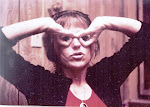
I got new glasses on Friday, and that’s me up there at 6 on Saturday morning. The new specs are kooky and they look like upside down glasses. They’ll take some getting used to. But it was fun to take the risk, trivial as it is, and not to care for the opinions of others. (But what do you think?)

Katherine Mansfield, who’s quoted today, was a brilliant short story writer who lived a brief but bohemian life. She was risk taker who flaunted social mores and she became, in acting for herself, one of the preeminent writers of her time.

“I want, by understanding myself, to understand others,” she said. “I want to be all that I am capable of becoming.”

When I perceive how my thought processes and motives work, when I can clearly see my flaws and strengths, I can be more understanding of your efforts to become what you want to become. I can be empathetic toward you when I am considerate of myself. If I don’t understand my own humanity, how can I appreciate yours?

All of this is a risk. I could make a fool of myself by putting on dorky glasses and risking your poor opinion. I could try to be what I want to be, but what if I fail at it? How can I become what I wish I were if you think, he thinks, they think I’m not good enough?

It comes down to courage. We have to have the courage to change, to take action. If I’m willing, I can think for myself. I can set goals and work for them. If I have courage, I don’t have to live in the fear of what if.

I get that courage by testing the water in small things. The world’s not going to come to an end if what I try doesn’t work out. Keep plugging away at it. It may be the hardest thing in the world to be yourself, but the garment you weave will fit you perfectly.

How are you taking care of yourself today?

~~~~~~
A Sunday 160
In which we say something profound in 160 characters (counting spaces). See Monkey Man for more.
At 5:45 a.m. on a winter day
When the night sky lightens to navy blue
I can see the bare bones of naked trees
The hope of morning swells in me
Like a red balloon.

~~~~~~

Saturday, March 6, 2010

The Paralysis of Thinking


“Take time to deliberate, but when the time for action has arrived, stop thinking and go in.”

Napoleon Bonaparte


Do butterflies have a brain?
Why does a tube of toothpaste have directions on it?
If microwaves were fluorescent green, what would your microwave oven look like while they bombard a cup of water?

Those are three thoughts I had between 4:30 and 4:45 this morning. They amused me, so I’m sharing them. Anyone have answers?

I could find the answers within a half-hour, thanks to the wonder of Google. But I’d rather talk about Napoleon. Should we take seriously the advice of a guy who ended up in exile because of his actions?

Of course we should. Many enormously gifted people have landed in prison because a more powerful faction could put them there. Just because he was a grandiose fellow whose aspirations exceeded his abilities doesn’t make him wrong.

Napoleon’s advice about taking action makes me think of some 12-step sayings that I love. For example: Take the action and the feelings will follow.

And this one: It’s easier to act yourself into a new way of thinking, than to think your way into a new way of acting. I personally love this axiom. It’s helped me do everything from the large (staying sober) to the little (cleaning house).

Excessive thinking often leads to paralysis by analysis. What I’m learning to do is this: Stop thinking and re-thinking, wringing my hands and pondering something every which way from Sunday, worrying an idea like a dog gnawing on a bone. Instead: Pray, deliberate, ask my advisors, and take the next action.

Just take the first indicated step into the situation. As Napoleon said, “Stop thinking and go in.”

Can you relate?

~~~~~

Friday, March 5, 2010

Have You Thrown Your Heart Lately?

Flash 55

This is a Friday Flash 55 in honor of a loved one's birthday today. Gone but not forgotten. If you want to tell a story in exactly 55 words, post it and go tell the G-Man.


Grief Stricken


Her eyes
looking at you
were tender
The light
in her smile
lit fires in you
Her hair
shone golden
in the sunshine
The lightness
of her touch
moved your soul
Her presence
sparkled
with life
The lightness
transfixed
you always
Her light
has died
now forever
How will you
ever breathe
again?


“Throw your heart over the fence and the rest will follow.”

Norman Vincent Peale


One night when I was 18 years old and tired of living in a small desert town, tired of hanging out with my druggie friends, I lay in my dark bedroom wondering what in the hell could I do?

What happened next, I can only describe as a vision that bloomed in my mind like a flower: I could go to college!

No one in my extended family had ever gone to college. At this idea of me in college, my heart smiled.

The next day I started writing letters, asking for information. I talked to my parents. They talked to each other. They hit me with an offer. If I earned half the cost, they would pay the other half.

I threw my heart over that fence. It took me almost a year to save the money from my florist-shop job. I decided on a university and got accepted.

All the rest followed. I studied my love, English. Graduated summa cum laude. Went to L.A. and enjoyed a 20-year career in magazine editing and writing. Made a rewarding life for myself…all because I put myself whole-heartedly behind a vision.

In the same way, I threw myself into Alcoholics Anonymous 20 years ago. I’ve stumbled, got up, and thrown my heart into it again. The vision of life as a sober person gets 100 percent of my commitment.

I’ve done the same thing with my marriage to Joe. For 18 years we’ve both put our hearts into this thing. We’ve learned forgiveness, acceptance, laughter, anger without mean words, and compromise.

When I read Norman Peale’s quote, those are the things I think about and feel grateful for. I think when we throw our hearts over the fence of a good cause, the rest follows. There’s a qualifier here: The cause has to be for our good, not for selfish, screwed-up motives. I’ve tried that way, and it led to unhappiness. But when the fence is good, when our commitment is full of our best efforts, when God smiles on us…the rest follows.

For what have you thrown your heart over the fence?

*****

Thursday, March 4, 2010

How to Make the Best of Things


“Things turn out best for the people who make the best out of the way things turn out.”

Art Linkletter


I picked my demented mother up Wednesday for her usual outing with me.
Her brain’s wiring is all screwed up. The lichen in the photo above makes me think of the plaque that my therapist tells me builds up in the diseased brain. This plaque screws with the synapses, the neurotransmitters, whatever, of the brain.

I’m learning to go with the flow with her, even when thoughts are not flowing well in her head. Since I’ve been practicing acceptance, I have a new peace about her condition. Sometimes peace morphs into hilarity. Sometimes I do a double take.

Today’s Alzheimer’s Poetry:
“What is that pink tree?”
“I think it’s a fruitless mulberry, Mom.”
“Well, yes, I thought it bore a resemblance, but then she went the other way.”

“She wasn’t much of a talker, but …..oh, well.

“Sometimes I miss those two boys, the ones who… the ones who…”
“Your boys, my brothers?” I ask.
“No, the ones that ride the bicycle.”

“Cataracts? I hear that’s going around.”

Here’s my point: I’m trying very hard to remember what Mom says, because I want to study her thought patterns and see if I can understand what part of her brain is affected. I’m trying to remember also because some of the things she puts together are so off the wall funny that I crack up.

My Mom-isms are a way of making the best out of the way things turn out. I’m learning how to banter with her, how to carry on a one-sided conversation with wacky things thrown out into the mix by my Mom. I’m learning slowly to laugh instead of cry about her situation.

When life hands you lemons, make lemonade. How have you had to make the best of things lately?

*******

Wednesday, March 3, 2010

Do It Before It's Too Late


“Live as if you were to die tomorrow.”

Mahatma Gandhi

One night I had an epiphany.

My dear husband and I had bickered that evening about something so trivial, I don’t even remember it. We had made a pact once that we wouldn’t go to bed angry, but that night we didn’t kiss and make up. He went to bed and I stayed in my sunroom, reading a good book.

When I went to bed, I was still a little cranky with him, but he was fast asleep. I lay there on my side of the bed, chewing on what had been said between us. I even made it a point to keep my arms and legs to myself.

Then the thought came to mind: What if he were to die tomorrow and this is the last night I get to spend with him?

So I lay there for a little while, imagining my life without him. The more I thought, the less I cared about the thing that had annoyed me. In fact, I stopped being annoyed, period. I did what I’ve been taught to do and asked myself, how important is it? The thing we had argued about had no importance at all in the bigger picture. My perspective was entirely restored to sanity.

So I hugged him in his sleep and let everything go except love. Nothing else was important.

I wrote this poem the other day when I remembered that epiphany in the night. It’s been a number of years ago now, but I haven’t forgotten the lesson I learned. Death (or the idea of it) issues us a challenge, said author and speaker Leo Buscaglia. “It tells us not to waste time...it tells us to tell each other right now that we love each other.”


Tulips Grow After You Pick Them

Their stems arc and lengthen
as they reach for the roof
the only flower that thrives
in captivity, or maybe not
maybe they do not grow
but reach back, longing for
the bulb the root the earth
where their hearts lie

as I lie here at night longing
for the touch of your legs
twining with mine
which I never told you
while I had you here
and now it breaks my
heart.

Tuesday, March 2, 2010

Do You Have Enough Happiness?


“Man is fond of counting his troubles, but he does not count his joys. If he counted them up as he ought to, he would see that every lot has enough happiness provided for it.”

Fyodor Dostoevsky


It’s interesting that this quote comes for one of the masters of suffering. Poverty, exile, physical ailments, and emotional suffering dogged Dostoevsky for much of his life.

I think it’s poignant that this man urges people to count their joys and discover happiness no matter what their lot in life. It’s a testament to the undefeated spirit.

I was taught early in recovery that gratitude is essential. My sponsor gave me these instructions:

Get up in the morning with a thankful heart, focus on helping others, and go to bed with a thankful heart.

If I followed directions, she said, I might have some bad moments but I would have good days. She steered me right.

The only bad moments happen when I put myself in charge of making sure things go okay. That includes making sure you do the right thing, and making sure events go the right way.

That is such a big job, it’s better left to God.

A friend of mine is struggling through a rough patch in a long marriage. They both see what’s wrong with each other right now. She’s trying to act lovingly and hoping the feelings will follow.

We can so easily dash each other’s hopes, with a single unkind word. All too often we feel the need to point out what’s wrong. And we have those magnifying minds: What we focus on gets bigger, whether it’s good or bad.

I wrote this poem with my friend in mind.
:::::

Relationship Trouble

When you tell me
I don’t meet
your expectations
I want to tear out
my hair
and ululate
like women do
in the East
to show you
there is a death
and it is me
you have killed.

************
In my own marriage, we’re trying to do what Dostoevsky and my sponsor said we ought to do, to count our joys and not our troubles. We tried the counting-troubles part and it was a failure. So we tried the other way, starting with a grateful heart and ending the day that way too. It works. It really does.
************
Big-time Gratitude: You can read my poem "Redemption" on the poetry blog Bolts of Silk.
And what about your joys? What happiness lives inside you today?
************

Sunday, February 28, 2010

You Are Who You Are


Me in a marble


“The easiest thing in the world to be is you. The most difficult thing to be is what other people want you to be. Don't let them put you in that position.”

Leo Buscaglia


I don’t know what a co-dependent is exactly, but I have a feeling that’s because I wasn’t one. I just didn’t like myself.
Having a relationship with my Creator changed all that in a miraculous way.

When I was young, I was bad. That was my role in the family, and that was how I stood vis-à-vis the God I was raised with. Can anybody relate?

Then I had a deep spiritual experience and was reborn. But I still fell terribly short of the requirements my faith dictated. Now God loved me, but I was supposed to live a very spiritual life, and I didn’t do that, so again, I was bad. This went on for decades.

Then I found the rooms of Alcoholics Anonymous. I did the 12 Steps with a sponsor and discovered forgiveness. I discovered my God not only forgave but loved me exactly as I am, imperfect and also very wonderful.

Part of my imperfection is that I really need the affirmation of others to believe that I am okay as I am. I can accept it today, since most other people feel the same way. Acceptance of my humanity makes it possible for me to be me and to let you be you.

Today my intuition is better than it once was, thanks to the Steps. I can feel when I’m not being authentic, when I’m searching more for affirmation than I should. I’ve also been blessed because the people I’m close to also accept me as I am, and they don’t require me to be other than that.

Do you believe you’re good just as you are? Are you glad you are who you are?
~~~~~~~

Saturday, February 27, 2010

The Little Things Matter


“It is by studying little things that we attain the great art of having as little misery and as much happiness as possible.”
Samuel Johnson

What are the “little things” Johnson is thinking of here?
The major events of Johnson’s lifetime were the Enlightenment, the Industrial Revolution, and the idea of the human right to democratic government (the American and French revolutions came after his death).
These were really big movements, made up of small discoveries.
On the other hand, microscopes were undergoing innovations at the time. Maybe Johnson was thinking of the microcosm. Maybe he was considering how to make a really good cup of tea.


“If the sight of the blue skies fills you with joy, if a blade of grass springing up in the fields has power to move you, if the simple things of nature have a message that you understand, rejoice, for your soul is alive.”
Eleonora Duse, Italian actress (1858-1924)

What are your simple things, and little things, that make you rejoice?

Friday, February 26, 2010

Successful Creativity


“Success is a journey, not a destination. The doing is often more important than the outcome.”

Arthur Ashe

Anyone who maintains a blog is creative. I think it’s the nature of the beast.
Titanium, who does her Element 22 blog with lots of originality, was acknowledged recently with the Kreativ Blogger award, something her wit and imagination well deserve. She passed it on to me.
The deal with this kind of award is that you explain who gave it to you and provide a link. Then you reveal seven factoids about yourself, and you pass it on to someone else. And somewhere on the post you insert this award:

I think I’ve told everything there is to know about me. But let me peel some layers off the onion and see what there is to find.


1. My first job was in a rock and mineral shop when I was 12. My dad got it for me because I loved rocks. I earned 25 cents an hour cleaning and helping rearrange the wares. Bonuses: The owner gave me rock and mineral specimens for my collection, plus I got free lunch at the next-door Tastee Freeze. I still have my rock collection.

2. My first car, presented to me the Christmas I was 16 by my dad, was a 1960 Studebaker Lark convertible. It looked like a black bomb to me and I despised it, because it was 1971 and the car wasn’t a classic yet. Dad paid my uncle $50 for it. I drove it for a year before cracking the radiator and getting a VW Bug afterward. My dad told me to be sure I always kept the radiator full on the Bug. I was paranoid until I found out it had an air-cooled engine and Dad was pulling my leg.

3. I trained as a florist in high school, then chose my university to study horticulture with the notion of a career as a floral designer. After one semester of plant identification, that idea went south, and my English professor talked me into switching majors. I kept up my work in floral design, and now I compete as an amateur in our regional fair. I won a Best of Show for my work last year.

4. I won a crossbow-shooting contest in the Swiss Alps while loaded to the gills on vodka. It was the first time I had ever handled a crossbow. It must have been the liquor.

5. I met my husband in an Alcoholics Anonymous meeting in 1990. Friends played matchmaker between me, a high-falutin’ magazine editor, and Joe, a truck driver with tattoos. I fell in love with him on our first date, when he described someone as looking like a “beachball with arms.” We’ve been inseparable ever since.

6. In the earthquake we had here in 2004, my town lost a few 1880-era brick buildings. I brought home some of the bricks and made this miniature piazza, in the shape of an iron cross with limestone accents. It serves no useful purpose, but I like knowing the bricks were handmade 130 years ago down by the river, and that I have preserved them from the garbage dump.

7. I love my Canon digital camera. These days I enjoy shooting with the macro setting. I cruise around the yard often, looking for possibilities. No one else gets to see the shots except me and sometimes you. That suits me fine. As Arthur Ashe said, the doing is more important than the outcome.

Now to pass on the award. I bestow it upon two blogs I discovered during my Haiti Challenge early this month. Please go visit them:

Patti at Pattinase looks at writing, books, movies, politics, life and music in creative ways. She covers forgotten books, old TV shows, political or corporate faux pas, old crime thrillers, what’s funny and what’s not. She’s fresh and interesting.

Rene at Not the Rockefellers promises to share the “view from the cheap seats” and she delivers with a wry sense of humor. I like her poetry too.

And do You think success is a journey, or a destination?

Thursday, February 25, 2010

A Good Day's Work


“Derive happiness in oneself from a good day’s work, from illuminating the fog that surrounds us.”


Henri Matisse


I am a fan of Matisse, with his vivid colors and unusual vision of the world. A print of the painting here, The Red Room, has graced my living room for 20 years, and I’m not tired of it yet. It was a good day’s work for him.

You are what you do, not what you say, or even what you think, although I guess the thought is the parent of the action. I believe that my character is defined by what I do, not the fine words I say or the confused, sometimes brilliant, sometimes negative things that run through my brain.

So a good day’s work, for me, is something by which I can judge myself. If I make myself do something despite my fickle feelings, I am proud of myself. If I illuminate one other life besides my own for a brief time, I am grateful.

I got the only C I ever got in college in my Philosophy class. I was 16 years old and taking my first university course. The prof made us read cumbersome books by boring people who thought way too much and did way too little. I apologize for my ignorance of his fine points, but David Hume bored me to tears. He was far too smart for me.

I like painters and poets and novelists and revolutionaries and volunteers, who pursue passions good or bad. I like the Shaker philosophy: Hands to work, hearts to God.

I didn’t feel like writing a poem yesterday morning, but I wanted to work at my craft. So I sat down and made myself write a simple poem. I liked myself better for having done it, and it was a good day’s work. What I’ve learned in recovery, among other things, is not to be defeated by my feelings, but to derive happiness from right actions.

What’s a good day’s work to you? From what does your happiness spring?


Rain

After a three-year drought that turned to dust the riverbed, the fields,
Today the manna from heaven falls softly on the surface of the soil,

Which laps it neatly like a cat at the water dish, and the pores of leaves
Open like rosebuds to drink it. The mock orange shivers with raindrops,

The pine needles quiver, those brave narcissus bend their thirsty heads.
Rain patters like music on the roof, no longer creaking in the sunlight

But tooting like a piccolo in joy. Rain, rain, rain, a sighing in the air
Of satisfaction escapes the mouth of the ground beneath my feet,

Breath I feel on my cool skin as I embrace the raindrops in my arms.
The roots sing as their veins swell, and brown water begins to pool

In the dry riverbed. Small puddles reach out to other pools; they link,
Trickle gaily into low spots; and the river’s muddy blood awakens.
*****

Wednesday, February 24, 2010

Two Lonely People in a Bar

"I have not failed. I've just found 10,000 ways
that won't work."

Thomas Edison

For 15 years my major relationships began in bars. After a night of drinking and talking, and with my judgment impaired, I'd fall in love and then try very hard to make the ensuing relationship work.
The drinking together part was fun. I was younger then, and I thought it was very liberated of me. What was hard was trying to relate together in the nondrinking hours. We didn't always like each other when we were sober.

But I was tenacious, if nothing else. I could even go years trying to make things work out well. Sometimes it was only a matter of months. In those days, a six-month relationship constituted a major event. But once I went eight years, off and on. Another time, it was two years.

I found the rooms of Alcoholics Anonymous when I was 36. I had tried to commit suicide three times. I had two children, one of whom I had placed for adoption. I had 15 years of failed relationships.


I don't think I was a failure as a human being. I think I found 10,000 ways that don't work, before finding the one way that did. Sobriety has been the great gift of my life.


Here's a poem I wrote about one of the ways that didn't work so well.
How do you relate to Edison's quote?


Two Lonely People in a Bar


To him—who speaks of nights that sound like scriptures
read by some poor trembling monk
who sometimes in the clutch of darkness
has traced against his will the silken flesh
with longing lips and flinching soul,
alone with his colliding needs—

she—who thinks herself forsaken—
is incandescent, whitely in the
dim gold bar lamps crying
I could make the morning
come


Tuesday, February 23, 2010

Jesus Didn’t Ride in a Land Rover


“What we’re saying today is that you’re either part of the solution or you’re part of the problem.”

Eldridge Cleaver
Speech in San Francisco, 1968


This week I found the blog of Father Marc Boisvert, who runs a large agency for children, called Pwoje Espwa (Hope in Haiti) 100 miles from Port-au-Prince.
He brings to light another in the evolving miseries facing Haitians more than month after the earthquake: the problems getting international aid to the countryside. A million people (by one report) have fled the city to surrounding towns, where they appear to be forgotten by relief agencies. Some excerpts from Father Marc’s blog:

Am not happy that I don't hear about any food being targeted for the countryside. The authorities are asking people to leave PaP and even giving them free transportation to Les Cayes and other smaller cities but how are we to feed all these people? [Jan. 31]

Families in the countryside are falling apart because they can't find food. There are no jobs and there's no relief in sight. Yes, we are here and there are other groups helping but the need surpasses our abilities. Wasn't it bad enough to suffer through such a massive earthquake that caused thousands upon thousands of deaths, destroyed the city of PaP, displaced a million people? If relief does not come soon for those in the villages and towns, it will be the end of Haiti. [Feb. 2]

Host families have been promised assistance but none has materialized. Requests were made at some major NGOs [Non Governmental Organizations] (one which received hundreds of million of dollars in US donations through the church) for food assistance but nothing has happened. The large NGOs, by their nature, cannot respond quickly in a crisis so maybe it’s just a question of time. I hope so. The problem is that the people are hungry now.
We are seeing a huge increase in requests for assistance from families who live near us so it is safe to assume this is the reality all over Haiti. A friend of ours who was providing for three children now has a house filled with 22. How to care for them?
Folks are begging us for food and we are doing what we can. [Feb. 14]

We were visited today by five representatives from the UN [and two international non-profits]. So far, there have been twenty investigators come to "visit"… We answered their queries and they appeared satisfied… They come to guarantee the safety of the children but don't offer us a dime for their care. I wonder how much is being spent on this? How many reports will be generated in triplicate and then collated and made into a major human rights publication?Now I know that some of this is absolutely necessary but there are times, like right now, when it just seems out of whack with reality. [Feb. 15]

Except for us grass-root small non-profits, there's been no international relief here. How much longer will we be ignored? Tensions are high in [Les Cayes] as people are hungry and have no means to purchase food. Families are hurting under the strain of hosting those from PaP. Heard that a small vessel came to port this afternoon and that there was a riot as people fought to get food. No police or UN military for security. No real plan other than give out food and blankets. Not good. [Feb 16]

[Regarding TIME Magazine article, UNICEF seeks to keep kids out of Haiti orphanages]
The director of UNICEF Haiti is quoted as saying "No to the orphanages in Haiti!" Wow, what a sound bite… a couple of days ago I was ranting about the fancy offices, the cold air-conditioning, the shiny cars of the big NGOs and their strategy to "make systemic change" rather than waste their time actually helping children by feeding them, clothing them, providing medical care...

Well, the one big NGO that had converted an old mansion into a gleaming office space with beautiful furniture and striking art work, that had lots of very busy people working on their computers, that had security guards protecting them from the riff-raff, that had paved over a large courtyard so that they could park their new SUVs...was UNICEF Haiti. They made a conscious choice not to practice direct intervention to assist a child. They have not helped any orphanage that I'm aware of in providing the basics like food, clothing, medicine, education. How very noble to stand there now and say "No to the Haitian orphanages!"
Phew, thanks for listening. I feel better now. [Feb. 18]

[Back to me again here.]
I don’t know anything about UNICEF except what I’m reading on Haitian blogs. This is the third charity blog I know of that has mentioned that organization with frustration. I think they deserve to be heard. One commenter on this particular post wrote: “Jesus didn’t ride around in a white Land Rover writing reports. He was too busy feeding the hungry and healing the sick.”

This post has gone on too long, and I thank you for your patience. I looked for news of Haiti on the BBC, CNN, and MSNBC. The only new story concerned a group of 2,500 people in a camp on the prime minister’s former office property. They say the police have stopped food and water deliveries to force them off the land.

The photos here are from Father Marc’s blog. In the top photo are some of the hundreds of kids living in the Pwoje Espwa compound, who have received new T-shirts. In the bottom photo are two children, Elandia and Judelin, from Port-au-Prince who lost their house in the earthquake. Their mother brought them to live with family in Les Cayes but there's no room and no money, so she asked Pwoje Espwa to take Judelin until she can make other arrangements.
And the good news is: On Monday’s post, Father Marc got the good word that a ship full of supplies, which they’ve been waiting for all month, was finally allowed to leave Miami!

Father Marc says the Haitians have a saying: Pa bliye nou. Translation: Don't forget us.

Sunday, February 21, 2010

Suffering Succotash Day 2


"Character cannot be developed in ease and quiet. Only through experience of trial and suffering can the soul be strengthened, ambition inspired, and success achieved."
Helen Keller

Is it true that suffering is the only way we develop character?

Does our success in life depend on the hardships we face?

Maybe Helen Keller, who went through life blind, deaf, and mute, was only justifying her existence, or to put it more kindly, was looking for the silver lining in the black cloud that was her life. Hmmm?

It's a good thing I'm not cynical. If I were, I wouldn't like me at all.

I happen to agree with Helen’s statement. It’s the only thing that makes sense of the suffering of good people. If there is a God who loves us, why do bad things happen to good people? Why does God allow fine people to suffer, while wicked ones get off scott free?

Questions like those are asked in the Bible. There isn’t one perfect answer, but partial answers abound: The rain falls on the just and the unjust alike. Trouble doesn’t differentiate between saints and wrong-doers. God uses trials to refine us like gold. Without the refinement, all the impurities would remain. God also turns all things to good for those who love Him and seek to do His will.

I know if you can make it through a period of suffering, you’ll be stronger at the end of it, just like a muscle being strengthened by the force of resistance. I know, because I lived through it.

Bad things used to make me whine and attempt suicide. But now, because of years spent surviving rough times and looking for reasons to keep believing in God, prayer, life, and myself, I’m able to walk through difficulties with some grace. I don’t fall flat on my face in the quagmire anymore.

Nietzsche said, “That which does not kill us makes us stronger.” Losing my father at a young age has made me compassionate with the losses experienced by others. Dealing with lifelong depression has made me sensitive to others with mental illness. Being a recovering alcoholic has made me empathetic with those who also struggle with issues of addiction. Having a mother with dementia has made me kinder toward her and others.

So experience has taught me that good comes of bad, if you look for the silver lining. What have you learned from suffering? How do you handle the trials of life?


Saturday, February 20, 2010

What Does It Mean? Day 1

A power flower in my garden.


Here’s my new blog project: I want to discuss the interpretation of a random series of famous quotations. How does a particular quote apply to my life? To yours?
Each day I’ll pick a new quote and ponder its relevancy. You’ll chime in if you feel prompted to add anything.

“Absolute power corrupts absolutely.”

This quote came to me at about 6 a.m. on an ordinary Friday, surrounded by the predawn darkness. It was just a random thought that flitted through my head as I drank my morning coffee.

It originated in 1887 in a letter written to a Catholic bishop by Lord Acton, a British historian and moralist.

I admit that I study government like I study quantum mechanics: a tiny bit. Philosophically, I’m a mutt: Libertarian, Republican, Democratic, Peace and Freedom… As I’ve gotten older I’ve developed an aversion to talking about politics.

But I have no aversion to sharing my opinions on corporate America.

Last summer, the corporations that govern my credit cards started sending me letters to tell me they were raising my interest rates. Since I had specifically chosen those credit cards over other credit cards because of their lower interest rates, I was curious why they were doing this to me.

In the fine print of the notifications, they all stated, “If you do not agree to this, you may opt out. Call XYZ.” So I called to protest, “opt out,” and insist that my interest remain the same.

Well, explained the disinterested customer-service reps, I was certainly allowed to refuse the interest-rate hike, but if I did, I must cancel the card. They made this sound like it was a choice.

To my way of seeing things, if you say to me, either pay up or I’m taking away your credit card, that is called extortion.

I asked to speak to the managers on duty. I was given the same “choice.” When asked why the rates were being raised, I was given a song and dance about rising costs and interest rates. When I pointed out that interest rates were at a historic low, I was stonewalled with the phantom “rising costs and interest rates.” When they discovered that I always pay off my balance, they all said triumphantly, “Then you don’t have to worry about it.”

The fact is, “absolute power corrupts absolutely.”

Congress passed a credit-card-reform law last May, but didn’t make it effective until this month. So credit-card issuers had carte blanche for seven months to raise all their fees and rates in anticipation of a law that now limits their ability to do so.

So what did they do? In the quest for higher revenues, they stuck it to us. They quickly exercised their absolute power to do as they wished, before the government could curtail it.

I call that corruption.

Corrupt: immoral or dishonest, especially as shown by the exploitation of a position of power or trust for personal gain.

What do you know about absolute power and corruption?