Protected by Copyscape Web Copyright Protection Software

Thursday, February 24, 2011

I Lived On Fat


After a Winter Storm

The white china sky broke this morning
so the Diner brought out the blue-plate special.
Customers fell into a frenzy for it.
You over there: Can you hear them
pounding the tables with their forks?
Can you hear the slap of waitress feet
and the hiss of fat on the stove?


(This is a Friday Flash 55, a challenge hosted by the G-Man. Go visit his blog for more strange recipes in exactly 55 words.)

When I was growing up, child of Depression-era parents, we saved bacon fat, pouring it into a crock that sat on the back of the stove. Anything to be fried we fried in a heaping spoonful of that softly solidified bacon fat heated in the old cast-iron frying pans. How old was the fat at the bottom of the crock? Was it safe to cook with? Nobody asked. A mess of green beans fried in bacon fat was delicious. A pan of chopped potatoes and onions was scrumptious. That’s what you cared about. There was lard for pie crusts, shortening for Betty Crocker baking recipes, margarine for bread, and bacon fat for frying. I never heard of olive oil until I was married. I learned the word “sauté” then, too. Somewhere along the line, I disposed of the bacon-fat crock.

We lived on beans, beans and biscuits, beans and cornbread, black-eyed beans and ham hocks, chili beans. We had Spam, hamburger patties, beef stew, corned beef hash, chicken-fried steak, and pot roasts on special occasions. There was always gravy. We ate beets and green beans, potatoes, buttered carrots, fresh corn on the cob and canned peas. We had homemade cole slaw or shredded carrots with raisins, or iceberg lettuce with thousand island dressing made with catsup, pickle relish and mayonnaise, or Jell-O salad with fruit cocktail, or sliced fresh tomatoes picked that morning.

When we were really lucky, we had fresh abalone steaks dredged in smashed saltine crackers and fried in fat. I have two memories of abalone. In one, my older brother and I went with my dad and uncle to a friend’s ranch on the coast, and we rode in a Jeep over a mountain down to the rocky shoreline. There the men pried abalone off the rocks while my brother and I entertained ourselves. I had to go number two, and there was nothing to use but ice plant, which grew everywhere, and it was not an unpleasant, albeit strange, substitute for toilet tissue.

In the other memory, the men brought gunny sacks full of abalone into my grandfather’s sawdust-filled garage, where they gouged the shellfish from the shell and pounded the abalone with hammers. The women were cooking in the kitchen until the men came in with platters heaped high with abalone steaks. Then the men took over the kitchen. Cousins were running around everywhere. Women in aprons bustled back and forth. That abalone feast was the best thing I had ever eaten.

We eat healthier now. We use fresh-pressed extra virgin olive oil grown locally, or real butter. No more margarine or bacon fat. I buy a bit of Crisco in packaged blocks at Christmas time, and a block of lard only if I’m going to make a pie. I make a fine gravy at Thanksgiving or the occasional family breakfast. Abalone hunting is banned around here. We don’t eat canned vegetables or Spam or corned beef hash. My husband doesn’t like beans much. I never eat Jell-O salad except on Christmas Eve when my aunt makes my grandmother’s recipe.

I learned how to cook in Home Economics when I was 13, and from then on I was the cook in the family, coming home from school and making dinner for my working parents. I branched out from Betty Crocker. In college I cut out recipes from magazines and bought other cookbooks. I cooked dinners for friends. Friends taught me about other foods. I began eating in fine restaurants. I invented recipes. I cooked for more than 45 years, as a teenager, college student, young wife, single parent, and older, wiser wife. When my husband was injured out of his career, he went to culinary school. Now he’s the cook except for Thanksgiving, and this past year, I started teaching him how to roast a turkey. Sometimes I miss the bacon fat. There are few more wonderful breakfasts than bacon-fat gravy with sausage bits and biscuits made from scratch.

Wednesday, February 23, 2011

Living with Sorrow


One thing you can depend on is that nothing will stay the same. Life will throw you a curve ball, a slider, a fastball you never saw coming. And everything will be different all over again.

My family got hit with a triple whammy this month. To respect the privacy of others in my clan, I can’t talk about details except to my trusted advisors. I haven’t known what to say in my blog. So I’ve said nearly nothing. But the itty-bitty-shitty committee in my head has been blabbing nonstop. I was told by oldtimers early in my recovery from alcoholism that my head is a bad neighborhood and not to go there alone. But at 1 a.m., 2 a.m., 3 a.m., it’s just me and the darkness and the chatter in my head. It’s a form of torture.

I’ve tried: counting sheep; counting steps on a green path in a forest; guided imagery; breathing; prayer; telling myself imaginary stories; herbals like melatonin, valerian root; tryptophan; wrestling with God; making gratitude lists; reading; even watching late night science programs about recycling. Nothing shuts off the committee.

A nasty bug has been making the rounds here in my town, and many people are falling ill for two weeks, a month, at a time. It settles in the chest and results in pneumonia in some people. I caught it and have stayed home for nearly three weeks trying to fend off another bout of pneumonia.

I’ve resorted to watching television, catching up on films I missed in their theater releases. So far I’ve seen “Revolutionary Road” (what a wrenching movie!), “Julie and Julia” (Meryl Streep’s tour de force), “In the Electric Mist” (James Lee Burke paired with Tommy Lee Jones!), “Nell” (give Jodie Foster an Oscar!), “The Duchess” (wow!), “Secondhand Lions” (loved it!), “Flawless” (another wow!), and “Masterpiece Classics” on PBS. I haven’t watched TV in years, being an avid reader instead. But reading has become difficult. I have, however, worked my way through one-third of award-winning David Brin’s “Sundiver” sci-fi classic.

Being ill, I’ve hit maybe four or five AA meetings in three weeks, and I’m accustomed to six a week. At least for an hour in a meeting, the itty-bitty-shitty committee falls silent. So I browse through what we call the “Big Book,” AA’s textbook, and the “Good Book,” my other “textbook for living.” I’m trying to concentrate on a few passages they contain:

First, on the subject of the “magic magnifying mind” that enlarges whatever it dwells on, there is this:
“When I focus on what’s good today, I have a good day, and when I focus on what’s bad, I have a bad day. If I focus on a problem, the problem increases; if I focus on the answer, the answer increases. … I must keep my magic magnifying mind on my acceptance [of things as they are] and off my expectations [of what things should be], for my serenity is directly proportional to my level of acceptance.” [Pages 419-420]

And this from the Good Book, as it has been quaintly called:
Rejoice in the Lord always. I will say it again: Rejoice! Let your gentleness be evident to all. The Lord is near. Do not be anxious about anything, but in every situation, by prayer and petition, with thanksgiving, present your requests to God. And the peace of God, which transcends all understanding, will guard your hearts and your minds in Christ Jesus. Finally, brothers and sisters, whatever is true, whatever is noble, whatever is right, whatever is pure, whatever is lovely, whatever is admirable—if anything is excellent or praiseworthy—think about such things. … And the God of peace will be with you. [Philippians 4]

I’ve heard it said (by Robert Louis Stevenson) that any man can carry a burden until nightfall which would overwhelm him if he tried to carry it forever. Therefore, focus only on this one day, doing the next right thing a moment at a time, and leave the future in God’s hands, where it rightfully belongs. In my life at this moment, all my needs are cared for. For that, I am grateful.


Thursday, February 17, 2011

There's an Amoeba in My Soup


Today we buried the last man of our parents’ generation in my mother’s immediate family. I looked at my oldest male cousins as we mingled and talked with each other when the ceremony was finished. In a couple of years they will hit retirement age. They’re the patriarchs now and both are good men. They treasure the old photographs and stories, and both in separate ways are creating archives. But I don’t think either one of them would like to assume the role of patriarch.
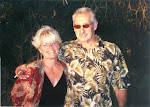
I would like my grandparents and my parents to be alive still so no one has to change roles in the family. I don’t enjoy feeling like an amoeba swimming in unfamiliar soup.

But life is a series of changes, isn’t it? It’s a series of necessary interludes, like winter, like the gathering forces of early spring, the fruiting of summer, the harvest in the fall. The cycle exists for the good of all.
This is the hymn sung at my Unc's service, one of my all-time favorites.


I Come To The Garden Alone


Sunday, February 13, 2011

Why Are These Chairs in the Snow?


On the heels of my post about contentment (below) came hard news, coupled with a game of tag with pneumonia again. Hardship doesn't change my point of view. Storms can rage above the soil, but the soil rests unchanged.

After days spent in bed, I checked in with the world renowned Poetry Bus and found the Love Bug's photo prompts for Monday's bus tour, coincidental with Valentine's Day. The eclectic band of poets around the world will do wonders with the prompts. We're linked here. I offer this dirge, constructed out of sadness and sickness.

Why Are These Chairs in the Snow?

The roof caved in
the first dereliction
I thought it better built than that
its mathematical strength collapsed
beneath the first frost

Then someone came and took the glass
in the dead of night
good windows they were
but not paid for
a double pain that

The door was next
solid oak and fireproof
not proof against the vagaries of wind
the neighbor heard it howl
as the hinges tore

That wall went
with the next big snow
unsurprising with the gaping hole
of the fleeing door
and purloined windows

Two more collapsed
in the following thaw
warping wood ripped out nails
poorly placed
poorly pounded

The north wall stood
a mass of ice
until our mattocks tore it down
to fuel the fires
in our separate homes

All that’s left
of your inheritance
are the chairs where your parents sat
and planned your legacy
claimed by squirrels

Saturday, February 12, 2011

Death Visits the House Again


Death Visits the House Again


Somewhere in the Milky Way, if that close,
or in a billowing rainbow-hued galactic cloud
a billion light years off
the Lord of all the Universe
has received the daily tally of the dead
on planet Earth
the special piece of real estate
he has treasured all these years.

As I turn my car onto my street and note
the movements of my neighbors
I think a resurrection
of black ribbons marking the homes of mourning
would be good.
I would like my neighbors to remark
that death has visited again
this house
to murmur perhaps among themselves
we have been hit again so soon
and marvel at our fortitude or grief.
Let them notice, let someone notice
our great strength
and let them bring food
thankful that it wasn’t them.

Sunday, February 6, 2011

Happiness: The Pros and Cons


I was asked to write about happiness. I remember having a thought: I just want to be happy. I don’t know how many times I had that thought, but I know I wasn’t happy when I thought it.

Happiness was a long quest without a map, looking for the missing element in me. The quest for the missing element, in hindsight, proves I was a believer in the myth that joy could be found Out There.

Leap through the years, the circuitous journey…

Happiness is an emotional state of joy…a smile, laughter, pleasure in the moment. Emotional states vacillate with the influences of circumstances and other people. I enjoy the pleasure of happiness, but I know it will pass, as all emotions pass.

What gives me lasting joy now is what I have come to know as contentment, a state of mind, a belief, a method of looking at the world.

Contentment means that I believe my life is fundamentally good, like soil can be good if it has the right composition, no matter what the weather is like above ground.

Contentment means that I appreciate and cherish the elements that comprise the soil of my life…my daughters, my husband, my home, my significant others. But also I value the intangible too: my poetry, my history, my memories, my character and personality. Contentment means that I am aware of these gifts and consider them treasures.

Contentment means that because I am surrounded and filled by treasures, I feel grateful, no matter what the weather is like above ground. The absence of complaint, yearning for more or resenting what is, makes a large room in my life for contentment to abide, take root and grow. Contentment, it turns out, is what I have wanted all along.

Happiness has its moments. I’ve thought about them and written some of the moments down. I'll save it for another day… But what is happiness to you?

Saturday, February 5, 2011

Free Advice Is Worth What I Paid For It


Have you ever paused to consider what your favorite room in your home says about you? I haven't. But this morning I noticed my writing room says something loud and clear about me: I live in a land of contrasts. The beagle dog hair lies an inch thick on the carpet (neglect, messiness, who-gives-a-shit, good grief, woman, have you never met a vacuum?), but a very clean pot of sturdy pink hyacinths has landed on my desk next to the laptop (life and beauty cherished here).
I'm off to search for soul at a workshop. I'll be back.

(Friday evening, I had this to say about life-shifting events:)
Another fun-filled day on the California central coast has passed. I don't think I told anyone what they should do about their life situations today. I did listen to a few people talk in a noon AA meeting. The topic was Faith: How Do You Get It When You Don't Have It?

I'd like to know the answer to that myself.


My convoluted path to well-being. Picture me on the lower left arm of the root. Got miles to go before I sleep.

****************

I had no sleep whatsoever Thursday night because I'm in pharmaceutical transition (it doesn't matter what that's about), and I drove into town at the crack of doom with a brilliant idea percolating merrily in my head. I'm either dog-tired of paying attention to icky things, or brilliant ideas are percolating merrily.

I think my life is shifting beneath my feet. Six months ago I was a boring middle-aged poet. Today, I'm looking into "clarified breathwork" and prenatal journeying, not to mention Metsu, which I thought was a Jewish ball of bread. I am pricing a hookah. I didn't know what a hookah was two months ago. I Googled "wellness retreats" and gave thought to the physical repercussions of a "cleansing" diet. I didn't like what I was thinking but there I was, thinking it anyway.

Saturday finds me in a local college town with my 80-something friend, doing something called "Searching for Soul." The workshop is free, so why not? What was I going to do with this Saturday that is so important, anyway? I think I'm going to ride my shifting plate tectonics (see below) like a surfboard and see what happens.

(Early Friday morning, I had this to say about people offering free advice about how to Behave:)
I was in a hot tub with my best friend last night, relating the sum of my week, which I found interesting and worth the ruminating. She listened like a good friend does, and then she pointed out that the conclusion I had come to was based on a flimsy foundation. I think she said something like "You're just buying into that because it co-signs your bullshit."

My bullshit being, in this case, taking long afternoon naps and once a week or thereabouts staying in bed all day.

It doesn't matter to her why I am doing that. It matters that I am doing it. This is a common refrain from our mutual AA sponsor. All excuses are navel gazing. My friend made her observation right after I told her what the hospice grief counselor said when I bemoaned the sleeping business for preventing me from doing things I believed I should be doing. The counselor said, "You're too busy lying down." That response cracked me up. I made her write it down on a piece of paper so I could show my dearly beloved. This is a bonafide counselor, in a PhD program from a worthy university.

"In yoga," said the counselor, "savasana or the 'corpse pose' is the most important part of the session. You lie on your back, still as a corpse. That's where the healing takes place."

So this morning, after yet another sleepless night, I wrote the tale of how I feel about all the good advice I'm receiving from caring people...and did it in 55 words, so I could participate in the G-Man's Friday Flash 55. You can check out the tales other people are briefly relating here.

I decided I will file this piece under the header: Everyone knows the right path for me to walk.

The physical therapist says improve
my mobility. The doctor says exercise
like my husband; my husband says
rise early and be punctual. My friends
say don’t lie abed but fill my days.
The grief counselor says my plate
tectonics are shifting, so rest as long
as I like. Of all the voices, hers I obey.


Wednesday, February 2, 2011

She Considers Beheading the Bird


Here's a challenge, in honor of
Groundhog's Day:

What kind of poetic sentence would you concoct with the words scythe, copper, rosette, cant, and canary?

I've borrowed the prompt from the California State Poetry Society's challenge for January, which I tackled at 4 p.m. on the deadline day, January 31, and finished at two minutes past the post office closing. Since it can't go anywhere, it may as well be a Groundhog's Day challenge for you. Post your sentence in the comments here. Have fun! (Update: Oh, you've got to see what has been concocted! I'll have to think of a PRIZE.)

Cogito Ergo Sum

The canary cant sing, said Madame Rosette, poised to behead the bird with a copper scythe.

But wait, said Bertram, her butler, formerly a copper with the Barstow PD, you are missing an apostrophe.
Your canary’s perch is not inclined incorrectly and furthermore your scythe is the softest of metals. It cannot decapitate the canary, for in battle with bird bone, bird bone will win.

Bertram, dear heart, said Madame Rosette, nary a whit of your wit addresses the essence of the sentence, to wit: The canary does not sing.
Since song is the essence of a canary, this canary has no essence. Ergo it must go.

But wait, said Bertram, your “ergo” is not foregone. Since song, as you say, is the essence of canaries, and this canary does not sing, ergo this canary is not a canary and should not be held to the standards of a canary.

Bertram, my darling, said Madame Rosette, twirling her scythe like a schoolgirl’s baton, I find your logic most arousing. Come, make me sing in lieu of the canary.

Whew, that was close, said the canary who was not a canary but a wireless server for the Bank of America, and it returned to cogitating sums.


Tuesday, February 1, 2011

What an Insinuous Day!


In the ongoing saga of odd words one has in mind upon awakening, I awoke yesterday with a word that isn’t even a word, but it should be: Insinuous.

Insinuous is the serpentine manner of something making its way into your consciousness. Unlike insidious, insinuous is not sinister, and unlike insinuative, cunning is not implied. There’s nothing pejorative about insinuous. A budding love affair can be insinuous, and a poem in its infancy can be insinuous. Alternatively, the dawning realization that your credit card company gives you nothing for free can be insinuous.

I ran into insinuous first thing in the morning at physical therapy when Jason told me to do an exercise and to remember not to….(as he poked my trapezius) and aha! I had remembered subconsciously not to do that. Then I stumbled onto it again at the orthopedist’s office as Dr. Dreamboat explained that my spine did not require surgical intervention and aha! I understood that my active participation was the preferred means of treating my malady (continue physical therapy; revamp my work environment; lose weight; strengthen my “core”).

Then came a credit card bill, from a new promotional account that advertised zero interest “if paid in full by the end of the promotional period.” The bill included a “maintenance fee” of $0.99. Righteously indignant, I supposed that a “maintenance fee” was a ripoff. So I called and asked. The nice girl said the fee is what it sounds like it is. I looked up my customer agreement, the thing with thousands of words in five-point type that you get with your credit card. Certain I would not find the fee there, I found the fee there. The credit company insinuates a price for everything. My discovery of it was insinuous.

Insinuous often runs into epiphany downstream. The word jelled in the afternoon at an AA meeting, where I realized that the tendency to blame “he/she/they/it” for my troubles dovetails nicely into “the deliberate manufacture of misery” as described in the AA Big Book. My pain was the fault of my dilapidated spine, which someone else (Dr. Dreamboat) could fix, and then I would be fine. Aha! The victim mentality is hard at work in that idea.

Work, naturally, is what I prefer to avoid. I’d much rather hunch over my keyboard, subsist on stress, make no effort to exercise, and feed my pain sugar and poetry. That’s much, much easier to do than to engage my backbone in its metaphorical sense.

All in all, the day followed an insinuous path to enlightenment. C’est la vie.

Friday, January 28, 2011

The Lady Made Me Shoot Her


The lady made me shoot her
said the tearful defendant.
She stalked me on My Space
tormented me with sexy texts
and forced herself upon me
in the park although I said no.
When she claimed she was pregnant
and threatened to tell my fiancé
she forced me to shoot her to shut her up.


This is a Friday Flash 55 tale, and it isn’t fiction; it’s my small town’s version of “Fatal Attraction,” such a gooey story that it makes front-page news every day with the trial in progress. The femme fatale lived, and she’s on trial as much as the poor fellow is. I think he’s guilty of pathetic stupidity just for having a My Space page at the age of 27.

Other Flash 55s are linked up at the G-Man’s place today.

Sunday, January 23, 2011

I Hope Nobody Saw Me

My favorite January job is pruning the 13 rose bushes in the front landscape of my house. Most of them are wicked little shits, excuse my French, so it’s challenging to work among them without getting torn up. This year I used long-handled loppers. Ha! Nary a thorn ripped my flesh.

What I love about pruning roses is the process of considering where to make the cuts. I have to work with the architecture of each rose and the network of branches it created in its growing season. However the shrub grew, I discipline it back into a vase shape, open in the center like a cupped hand. I get rid of stems I don’t like and cut the rest at a particular place to force growth outward, away from the center. It’s an art form for me, working with the rose to create something pleasing.

I did the roses in batches this past week, a few at a time, because I was paranoid about making my ridiculously unhappy spine even unhappier. Maybe the event I’m going to describe for you (in a minute) happened because of that, because I felt at the mercy of a thing not of my choosing,

NanU, the Science Girl, drives the Eejit’s Poetry Bus around the world this week, and her prompt threw me for a loop: She said, write about something you like that other people don’t like. Or you’re afraid they don’t like it. Or you think they think you’re strange for liking it.

Ultimately, I wrote about something I did one afternoon, after the roses. I chortled as I did it, like a little maniac, and I did hope that no one saw what I was doing. It will be interesting to see what other Bus riders do with that prompt. We’re all linked here.


Free the leaves and they will bless you

in the dead of winter’s landscape
the brown thatch
of the lilac bush
sleeps beneath its brother the sycamore
the pair of them
stripped to the bone
frozen in the act of grabbing the sky

trapped in the cage of the lilac bush
sycamore leaves
curl fisted hands
thwarted in their pilgrimage from tree
to ground, from
steeple to grave
denied the sanctuary of soil

one moment on one ordinary day
you pass by them
going somewhere
as blindly as you have passed before
intent on some
forgettable chore
when you hear it and then you hear it

in the silence you recognize the sound
~the resignation
of anguish~
and it calls to you as a comrade would
you stop to look
you see the leaves
furled and wretched in the lilac’s web

instinctively you free one brown leaf
and watch it
settle into place
among its clan, then possessed by some
strange jubilance
you shake the shrub
hard, free all the leaves, laughing like God

Friday, January 21, 2011

I’m at War!


You haven’t heard from me this week because I am embroiled in a ferocious battle. The war I wage is against an innocuous foe. Who would have thought that PAPER could be so vicious? The army is endless! It multiplies! One skirmish is won, and five more await. Here is the horror, in 55 bloody words.
~~~

Oh so many bills to pay!
The pile of poems to rewrite!
Insurance snafus to be set aright!

Crap from the tax assessor!
From the attorney, more spews from the sewer!
The hospital kidnapped my mother ~ that's a mountain of manure!

Oh bookkeeping failures!
The annual taxes await!
Assaults by paper do not abate!

~~~
This is a Friday Flash 55. Go see the G-man for more fun and games. And thanks to the Monkey Man for his load of manure.

Sunday, January 16, 2011

Don’t Haul Me to the Dump Yet


The Totalfeckineejit's world-famous Poetry Bus trundles around the continents today as if the Master himself had the controls. Why, yes indeedie, he does!

He, Master of the World's Greatest Blog, Master of the World's Darkest Verse, has set forth a challenge most odd. "Git down wit' yore bad self and tell us who ya be." (I'm paraphrasing)

So if you don't like sentimental hogwash, hie thee over to the Eejit's blog where several brilliant anti-arty-farty types can be tracked down.


Don’t Haul Me to the Dump Yet

I am a breath in a garbage can
restrained
by the lid
hovering over the debris half-filling the can
half-filling the can! Optimism floats
in the molecules of breath, my elemental life
contained
in a paper sack
from a fast-food joint, twisted closed
and disposed of here
hovering over the debris half-filling the can.
Here is the map of my scars
wadded up but still it charts
the web of
red-veined
highways, crosswise roadways that led me
to this half-full garbage can.
Here desiccated flowers prove
my journey passed through gardens
and thus not all was lost
but much
remained
nor is it garbage, the debris
half-filling the can.
Girdles have retired here, napping
with tie-dyed shirts and platform shoes
dried red teardrops on Waterford crystal
the first night alone in my first house
Here Thoreau still beats his drum
Neruda murmurs love songs in coffee-
stained
books.
I breathe. I float.
I gain
more filling.


Friday, January 14, 2011

Serenity Took a Hike

The Enchanted Oak’s household has had a week of fun and games, yessireebob. The roles of clandestine medical investigator, procrastinating freelance journalist, pissed-off computer user, and perplexed pain sufferer all neatly dove-tailed into an MRI machine on Monday and a giant-sized pity pot the rest of the week.

This is my backbone.

I hurt all over. Couldn’t move my head from side to side, couldn’t walk without electric shocks, couldn’t even type, thanks to swollen hands that buzzed as if they had been asleep for years. I was not at all serene about any of it.

So what does a good sober person do? Don’t ask me, because I didn’t do it. Instead, I went to bed. Stopped eating, drinking, moving, attempting to make my copy deadline. Turned off the phone. Cancelled all appointments except the one appointment I didn’t want to keep, the one with my doctor to “discuss the results of the MRI”…oh, what an ominous sound! I just knew I had a fast-moving malignant spinal tumor from hell and would be dead in weeks if not days. I told you I was sick!

Ah, but I was spared. My spine is just degenerating. Things could be worse. But I went back to bed anyway because it pissed me off. Then a couple of friends came over yesterday, caught me with my bed-head hair and my p.j.s., and told me to shape up. I said thanks and kicked them out. Then I got dressed and went to an AA meeting.

This morning I woke up pain-free. How do you like them apples? I likes them just fine. So I decided to write a 55-word poem about the ordeal and the redemption of friends, just because the G-Man hosts his Flash Friday 55 today.

The doctor said my problem had no cure;
Its consequences and its pain I must endure ~
Pain pervasive, electric, downright hideous
Making harmless motions most insidious,
Thanks to a backbone suddenly perfidious:

When isolation was my intention,
My friends performed an intervention.
Their deep concern caught my attention
And sparked my outlook’s swift ascension.

Thursday, January 6, 2011

Tired of Fighting

I’m glad somebody has written an instruction manual explaining when to accept a situation and when to change it. I didn’t get Life’s Little Instruction Book when I was born, and what I know I’ve had to earn through trial and error. Much of what I’ve had to let go has scratch marks from my fingernails trying to keep hold of it.


So I was happy to be asked to review a book called “The Wisdom to Know the Difference: When to make a change—and when to let go” because I seriously need some tips. Life has been dicey for the past nine months and it looks to continue in that vein. There’s nothing remarkable about my “issues” except they’re new to me: Health problems, family worries, financial concerns, death and loss. I want to change them. Mainly I want them to stop hurting.

“The Wisdom to Know the Difference,” written by a Quaker spiritual teacher, Eileen Flanagan, is a guide to using the “serenity prayer” to change or accept the circumstances in one’s life. These days I’m saying the prayer with renewed vigor. I’ve said it thousands of times in AA meetings and I grew numb to it. Now I mean it with all my heart:

“God, grant me the SERENITY to accept the things I cannot change, the COURAGE to change the things I can, and the WISDOM to know the difference.”

I used to think the prayer was about ACCEPTING all the bad stuff inflicted on my world by outside forces. My AA training emphasizes acceptance: “Acceptance is the solution to all my problems today.” I have always choked on that, because as someone once told me, my “justice” meter is very sensitive. I’m a child of the anti-racism, anti-war, feminist era, and I fight back when people or institutions perpetrate injustice. Refusing to be intimidated, refusing to accept wrongdoing, applying effort to make change happen ~ this attitude has created major changes in my lifetime.

“The courage to change” is a strength, isn’t it? How will I discern “things I cannot change” unless I try to change them, and fail…a number of times? I feel as if I’ve fought for things all my life ~ overcoming my upbringing, success in college, good jobs, incompatible men, major depression, recovery from addiction, trying to be a good mother, a good daughter, a good wife. But last week I heard myself say, “I’m tired of fighting.”

I realize suddenly that it’s SERENITY I’m asking for first of all; peace of mind has to come before I can even think about accepting a situation or being courageous enough to work for change. For me, peace of mind is composed mainly of trust, the belief that all is fundamentally well. In talking with my hospice grief counselor and reading “The Wisdom to Know the Difference,” the spiritual journey starts with examining my ability to trust God’s ability to take care of things.

Some people read the instructions when they get a new product and some people don’t. I like instructions. So I appreciate the organization used by author Eileen Flanagan in “The Wisdom to Know the Difference”: seven steps in seven chapters, each one opening a gateway to the next. Eileen uses a logical process to describe a spiritual one, with lots of concrete examples from the lives of people she interviewed. She gets high marks from me for offering plenty of practical actions along the way ~ spiritual wisdom is wonderful, but I want to know what to DO in everyday life.

This is a book that needs to be studied. It asks searching questions. It aims to help to you transform your life in important, long-lasting ways. Take a look at the nature of her seven “lessons”: Recognize your conditioning, get to know who God made you to be, listen for divine guidance, change your attitude, accept yourself and others as you all are, let go of what you think things should be, take part in a community of people. There’s a lot to be done in the way of self-evaluation.

Eileen’s premise is that the serenity prayer asks the God I trust to give me: 1) peace in the face of things I can’t influence, because I have faith that God has a loving plan much larger than I can comprehend; 2) courage to act when I ought to act, because many times change for the better is needed; and 3) the inner clarity to discern which of those two God wants me to do. Making changes is equally important as recognizing when to let go and let God. Letting go is not the same as giving up.

“The Wisdom to Know the Difference” tells me that the serenity prayer isn’t about standing around accepting there’s nothing I can do to change things unless God assigns me some mission. Acceptance doesn’t mean doing nothing. There’s always something I can do, and often that involves the hard work of honest self-examination, recognizing what I’m afraid of, releasing my grip on expectations, and changing my attitude.

My review is part of a cyber book tour, and if you’re interested, you can see with other reviewers think here.


Tuesday, January 4, 2011

Why Is There Air?


Curious phrases that pop into my mind first thing in the morning: Why is there air?

That one came out of the deep dark past. Way back in my prehistory, Bill Cosby put out a comedy record (remember those?) that we kids thought was hysterical. In one of the bits, Cosby says his kids come up with impossible questions. Why is there air? they ask him. He doesn’t know, and in frustration he says, “There’s air to blow up basketballs!!”

I realize this morning that I’ve been harboring a few impossible questions myself. They’ve been buzzing just below the radar so I’m not aware of them but they’ve been influencing my attitude.

I walk around in serious pain all the time now. This past week I learned parts of my spine are falling apart. Meanwhile, I’ve been very busy combing through my mom’s medical records and sending stuff off to my friendly law professor. That has forced me to deal with health-care facilities and the Privacy Act. And every time I use the keyboard on my computer, the cursor jumps around maniacally so I waste tons of time correcting its random acts of violence, not to mention the hours searching the web for solutions.

This morning, as I look out window at the foggy landscape and hear the question “Why is there air?” in my head, I realize something important: In the shadows of my conscious mind, I’m asking impossible questions of the universe.

Why did my mother get Alzheimer’s? Why did that doctor treat her so abominably in the emergency room that night? Why are my computer’s cursor and mouse misbehaving? Why do I have to deal suddenly with disintegrating disks and vertebrae in my neck?

These questions are causing resentment, or they arise from resentment, I don’t know which. Resentment is literally sickening. It makes life uncomfortable, makes my attitude bad, interferes with my relationships, and prevents me from living in gratitude.

Hm. I need to go have an attitude adjustment. Read, pray, get my Higher Power involved in my thoughts. I have a busy day ahead of me and it would be good if I were thankful for the ability to live and be.

Saturday, January 1, 2011

Beginning with Flames

The sky that greeted me this morning, this first day of a new year, was beautiful. I ran outside in 35 degrees in my pajamas with my camera so I could show you the show. How could I not feel the grandeur of life with a sky like this?

I had all kinds of things to say when I came back to my desk hours ago. But I got waylaid by a poem that wanted to be written, and then by a question for my wonderful law professor, who has arisen from the mire of bureaucratic indifference to take on the cause of a hospital’s violation of my demented mother’s civil rights.

One of the tragedies of Mom’s last few months was her “kidnapping” by a hospital 30 miles from home, which held her captive, in restraints, and under guard for five days without notifying her family. One night before the long Memorial Day weekend, she was sent to an ER by her Alzheimer’s care home for a checkup after a fall from bed tore a little skin on her forearm. She didn’t want to go, but no one listened because she had dementia and couldn’t speak well and it was the home’s protocol. The ER physician ignored her Advance Directive and all of her attempts to refuse treatment, calling this tiny woman “extremely combative,” “severely demented,” “extremely agitated,” with “strong, purposeful movements” that indicated “she wanted to be left alone.”

So he knocked her out with a sedative. He made a mistake in reading her medication chart from the care home, and he wrongly thought she was receiving the sedative all the time. His boo-boo put Mom in a coma and practically made her heart stop. The hospital admitted her without calling anyone on her emergency contact list or looking at her Advance Directive (which said in several ways, don’t do this shit to me!).

For the next five days, this woman who couldn’t put three words together, unable to ask for help, tried to express herself by attempting to pull out the IV and catheter, so they tied her hands up. Then she tried to leave the bed with her hands in restraints, so they put a guard in her room. Finally, all she could do was spit out the pills they put in her mouth.

I found out what had happened to Mom the day before my usual weekly visit to her home. The treating physician, a nice guy, wanted to do an invasive test, so he just looked at the cover sheet on her file, picked up the phone and called us. She cried when she saw us. When the doctor finally read her Advance Directive, he declared her terminal and called in hospice.

I’ve spent six months researching the law and consulting lawyers. The lesson is this: If you have dementia and find yourself in a hospital, you don’t have civil rights. You can have all kinds of legal documents to protect yourself from whatever those medical strangers want to do to you, but there is no law in the entire country or in any state that says you, the impaired human being, have the fundamental civil rights to self-determination, legal representation, or refusal of treatment. Those rights are spelled out and granted to every class of citizen in the United States, except the incapacitated adult in a medical hospital. There are suggestions in statutes that hospitals “respect” you and notify your next of kin, but every day, across the U.S., handicapped people are treated like my mother was.

Thank God, I’ve connected with a law professor who sees this situation at work, and who has helped draft laws in California to protect the rights of patients in nursing homes, mental hospitals, and prisons. What happened to my mother, he says, can set a precedent in this country and make a difference in the lives of other people. Just because he likes being a champion for others, he’s sitting in Florida during his university break, studying my mom’s case, all the records I can send him, and all the pertinent court decisions. Hallelujah! Thank you, Mort!

Now that I’ve told you more than you want to know about that, here’s the poem that begged to be written before sunrise today. God’s blessings on your new year.

The Fence of Words

I have become an observer of pain, she said
stirring cream into a mug of Italian roasted coffee
until it is the warm color of a graham cracker

She looks nothing like a lover of Marquis de Sade
in her Mickey Mouse sweatshirt and ruffled blond hair, yet
I have become an observer of pain, she said

then freezes in the kitchen with a grimace, eyes screwed
shut, the coffee spoon a conductor’s baton
Fire, she said, white lightning, nuclear fission

from tailbone to buttocks to the front of the thighs
the atoms split! Still as stone she peers into the cave
within, a seer in a white sweatshirt holding a spoon

I have become an observer of pain, she said
I describe its incarnations, I voice them for you
our brothers and sisters, so we may know the beast

that assaults us, corral it with a fence of words
contain it, name it, explain it, tame it maybe
Be it a heart or a bone, once known, we can bear it.


Thursday, December 30, 2010

Beware of Expungement


Every now and then I get bummed out. I love that phrase: "Bummmed Ouut." Or the more prosaic: "Bummed." I get bummed every now and then. I'm proud of my generation for dreaming up that one. Otherwise I'd have to go with "sad," "mad" or "bad" or visit Roget's Thesaurus, where I can get lost for days.

It has been a long nine months, beginning back here with the FBI raiding my demented mom's care facility and giving her the boot. Then she had a horrible couple of months and died. Then pneumonia, then a family feud, then yada yada yada, culminating with me on the pity-pot this week. Not a comfy place to sit.

In everything give thanks, sayeth the Bible. My 12-Step program makes gratitude a numero-uno priority. So I'm working on my y attitude. Meanwhile, I thought I'd let you have a peek at the unedited me. Part of my love affair with poetry is that I get to expunge (!) (is it real, or is it Roget's?) expunge the bad stuff that would otherwise stew inside and grow toxic.


Caution: expurgation going on here:


End of December

I lie down on my bed with my fat dog
beside me growing old before his time
slowly dying of his master’s love
for feeding him relentlessly

If only I could fall asleep and awaken
next spring, like the trees in my yard
or the magnolia in the garden, then
I might remember happiness or even

contentment. At 5:30 p.m., Dec. 28,
sleep is a dream that keeps me awake
as do the past year’s march of miseries
and I name them in case I should forget

starting with my mother’s demented
implosion on the Ides of March
then her slide into madness and death
and all that followed, discord, illness

the tapestry that was my family
unraveling thread by thread faster
than I could piece it back together
My fat dog snores, snuggled close

and I try to believe this is love
this is enough to keep going on
this is a blessing big enough
to balance the accounting sheet

But in the end I lie awake counting
my woes, angry with myself
for being wretched when I have a dog
beside me growing fat and old with love


Wednesday, December 29, 2010

In Remembrance


On this day 120 years ago, 150 Sioux people were massacred by the U.S. Army beside Wounded Knee creek in South Dakota. Almost half of them were women and children.

The phenomenon known as the Ghost Dance in late 1890 had led to a resurgence of resistance by the native tribes, who had been ordered to reservations created by the U.S. government. The Ghost Dance vision foresaw the return of the buffalo, and a new freedom for the Indian. Officials feared it would lead to native uprisings against whites.

On Dec. 29, 1890, Big Foot’s Sioux band was retreating as ordered to the Pine Ridge reservation. On the 29th, surrounded by a force of more than 350 men armed with cannon and guns, the Sioux had given up what rifles they had and were powwowing with cavalry leaders about the ordered retreat.

During the powwow, a single gunshot was heard. Immediately the cavalry, including cannon, erupted into gunfire at point-blank range. Half of the Sioux people were killed outright, along with 25 soldiers from “friendly fire.” Many of the remaining Sioux were tracked and killed. A few survived to make the trip to Pine Ridge.

Wounded Knee Creek

In the frozen waste of the Badlands I sigh
under the snow for those who fell here

I remember the red-stained white snow
churned into mud and blood by fear

I hold in my white arms the memory
of frightened people running like deer

Between my banks the water still flows
to honor them, tear by helpless tear

(© Chris Alba)

If you click on the photo above, a Sioux invocation from the archives of Edward Curtis, you’ll go to YouTube for an awesome ballad by Robbie Robertson about the massacre at Wounded Knee.

There’s a very fine book about the westward expansion of the U.S and its destruction of the Native American people, called Bury My Heart at Wounded Knee, by Dee Brown. It culminates with the massacre at Wounded Knee, which is generally considered to be the end of the Indian Wars. You can find Wikipedia’s discussion of it HERE.

Sunday, December 26, 2010

A Post-Christmas Giggle


Twas the day after Christmas, and all through the house
Not a laptop was stirring, nor a computer mouse.
The hubby was working, but the little wife was not;
she was stretched out immobile on the marital cot.
The kitties lay with her and occasionally a dog.
The creatures were sleeping, unconscious as logs.
Dear hubby washed cars, and dishes, and clothes
While wifey my dear was not troubled by those.
For curious reasons, her spine was a tingle
As were her hands - such gifts from Kris Kringle!
Electrical pain shot jolts through her neck
Making her cry , "Hey, what the heck??!!"
She wrote a quick poem, then quickly she fled
To the warmth and relief of the marital bed.
.........
And that's enough of that crap.

Here, late in the evening, is a tribute to Monkey Man and his Sunday 160, a tale told in precisely 160 characters and spaces:

Hours wasted Christmas Eve
Hiding gifts in paper
On Xmas morn two seconds later
got mounds of trash you can’t reuse
It’s the “Xmas Wrapping Ain’t Recyclable” blues